ASPPB’s Pathways to Servant Leadership

Saluting the Volunteers, Jurisdictional Board Members Supporting Our Success
Volunteerism is a cornerstone of the Association of State and Provincial Psychology Boards (ASPPB)®’s success. Their dedication, passion, and knowledge empower our 66-member jurisdictions across the U.S. and Canada to protect the public every single day. Thanks to their servant leadership, our mission isn’t just accomplished, it thrives.
ASPPB’s volunteers contribute to many committees that further organizational needs, such as, but not limited to, the ASPPB Board of Directors (BOD), the Finance and Audit Committee, the Model Act and Regulations Committee, and the Mobility Committee, which promotes mobility for psychologists across all ASPPB jurisdictions. There are also various committees leading the development and maintenance of exam questions and forms for the Examination for Professional Practice in Psychology (EPPP)® and the Psychopharmacology Examination for Psychologists (PEP), which are fundamental to public protection.
There are various pathways to volunteerism within the ASPPB that require extensive involvement in psychology licensing regulation, committee work, and leadership of jurisdictional boards and colleges. In addition to outstanding professional accomplishments, our volunteers embody a sense of servant leadership that reflects ASPPB’s values of quality, respect, responsiveness, accountability, and transparency, placing the well-being of the psychological community, regulation, and consumer safety ahead of their own.
Volunteering for ASPPB
One way to volunteer is by responding to a public call for participants, such as the March announcement seeking licensed/registered psychologists for the Examination and Item Development Committees.

ASPPB Volunteer
What is your most rewarding accomplishment as a volunteer?
“Professionally, being able to help develop the EPPP (Part 2 – Skills) from the ground up and using those skills to help now shape the direction of the upcoming integrated EPPP are definitely top for me. In doing this work, I had the opportunity to create the initial draft of what would become the blueprint for the integrated exam, which was a very rewarding experience! However, the relationships I have built with incredible psychologists from across the profession are also up there, and volunteering has enhanced my career through the establishment of long-lasting friendships and professional networks.”
For Dr. Kamper, volunteering is rewarding because it has led to tangible benefits for both the profession as a whole and for his career. “Psychology as a discipline exists today due to the contributions of countless hardworking professionals, and there are few opportunities as uniquely impactful and rewarding as working with ASPPB.”
Another pathway to volunteerism in ASPPB is to represent a jurisdictional Board or College. Dr. Linda Frye Campbell, from the Georgia Board of Examiners of Psychologists (GBEP), serves on two ASPPB committees. She is the Chair of the Board and College Chairs Committee, which facilitates communication between regulatory board chairs and the ASPPB BOD. In addition, she serves in the Item Development Committee (IDC2) alongside Dr. Kamper.
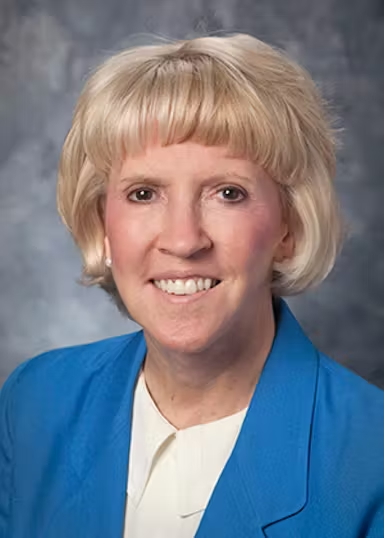
Georgia Board of Examiners of Psychology
ASPPB Volunteer
“Dr. Campbell’s many contributions over the years are deeply appreciated, particularly as she balances her service to the ASPPB with her work at the Georgia Board of Examiners of Psychologists and her dedication to preparing future generations of psychologists as a doctoral-level professor at the University of Georgia,” said Mariann Burnetti-Atwell, PsyD, ASPPB Chief Executive Officer.
Those who volunteer for ASPPB and serve on State boards bring diverse perspectives as regulators, psychologists, and administrators, all of which are of extreme value to the Association.
Heidi Herbst Paakkonen, MPA, has volunteered for ASPPB since 2019. Paakkonen is the Executive Director at the Arizona Board of Psychologist Examiners, which represents 1,728 licensed psychologists. She came to her role as a regulator having previously witnessed and experienced the benefits of volunteerism in similar boards. Her jurisdiction’s culture of engagement with ASPPB and other member jurisdictions has helped her source new ideas, awareness, best practices, strategies, and solutions to help support public protection.

Arizona Board of Psychologist Examiners
ASPPB Volunteer
Heidi’s Perspective as an ASPPB Volunteer
“Serving on the ASPPB’s Potential Regulatory Implications of Licensing Master’s-Trained Individuals Task Force (PRI-LM) prepared me to effectively inform the members of the Arizona Board of Psychologist Examiners, to whom I report, about this significant public policy issue that, at some point in the future, will impact our jurisdiction. This experience positions our jurisdiction to be prepared to manage a novel public protection challenge.”
For Heidi, servant leadership contributes to her sense of fulfillment and enhances her professional purpose. She also enjoys serving alongside veteran ASPPB volunteers. “I have profound appreciation for the fact that ASPPB and all of its components value the perspective I bring as an administrator to a jurisdiction’s regulatory body. All regulators’ viewpoints and insights, regardless of their respective roles in their jurisdictions, are invited, and ASPPB’s governance has always shown appreciation for the contributions I have gratefully made,” said Paakkonen.
The Board of Directors, a Multi-Year Commitment to ASPPB
ASPPB’s Board of Directors sets the organizational tone and example for servant leadership. Their multi-year commitment is instrumental in sustaining the association’s mission, vision, and values.
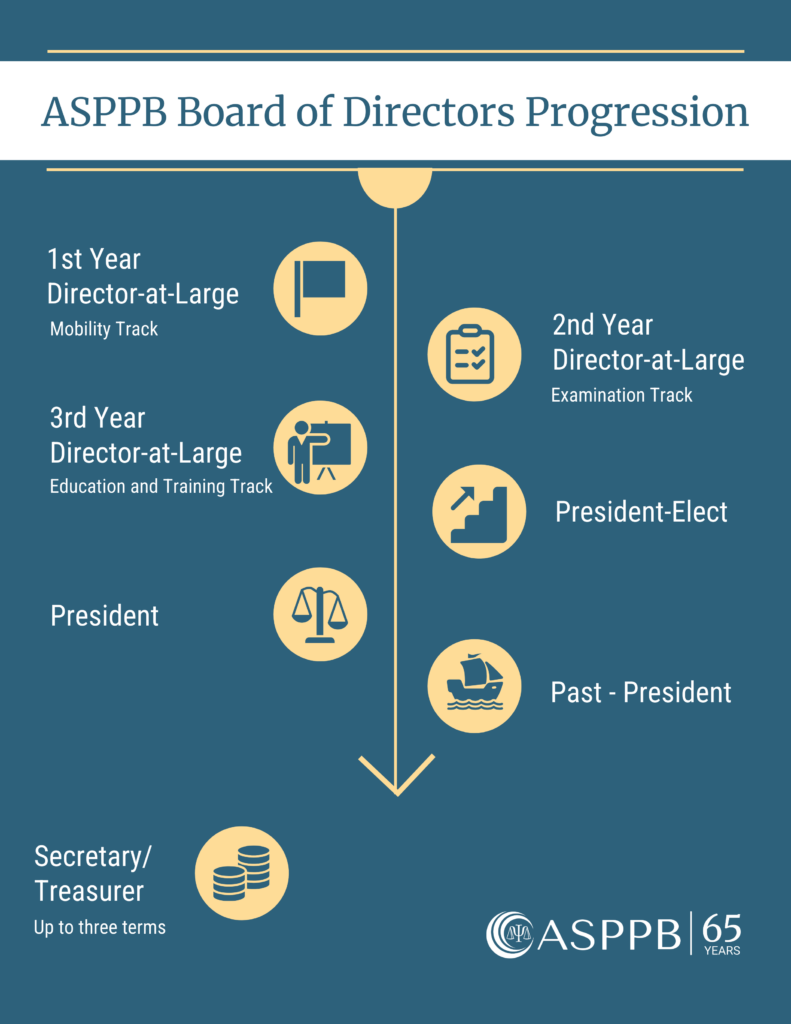
Each fall, at the Annual Meeting of the Delegates, elections for the Board of Directors (BOD) are held. The first of a three-year commitment begins with election as a Director-at-Large and, if Directors choose to, they can go on to run for an additional three-year term in the Presidential track, which culminates in the role of Past-President. There are three Directors-at-Large, and each year they serve on a set learning pathway that helps them become familiar with different organizational areas. They also act as liaisons to various external psychological organizations.
ASPPBs BOD’s Six-Year Pathway: From Director-at-Large to Past-President

ASPPB 1st Year Director-at-Large
To illustrate the six-year BOD progression, we begin with Dr. Gabriel Cline. As the 1st Year Director-at-Large, he was elected last fall at the ASPPB’s 65th Meeting of the Delegates and assumed office in January of 2026. His first year is being spent in the Mobility Track, which includes serving on the Mobility Committee and three additional committees: the Model Act and Regulations Committee, the Finance and Audit Committee, and the 2026 Midyear Meeting Committee.
For Dr. Whitney Koch Owens, 2nd Year Director-at-Large, the Examination Track allows her to participate in the Committee on Exam Coordination as well as in an additional seven committees related to the management and development of EPPP and the Psychopharmacology Examination for Psychologists (PEP) exams. Her term as 3rd Year Director-at-Large begins in January 2027.

2nd Year Director-at-Large

3rd Year Director-at-Large
Dr. Stacy Waldron, who currently serves as 3rd Year Director-at-Large, has already completed the Mobility and Exams Track and is now serving on the Education and Training Track. In this track, she serves as a liaison to nine organizations representing a broad range of education and training areas.
For 2026, Dr. Ramona N. Mellott serves as the President-Elect. Some of her additional duties include serving on the Annual Meeting Committee, the Finance and Audit Committee, and the ASPPB Executive Committee.
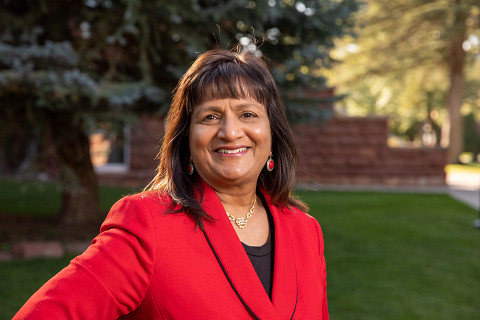
ASPPB President-Elect
ASPPB Past-President
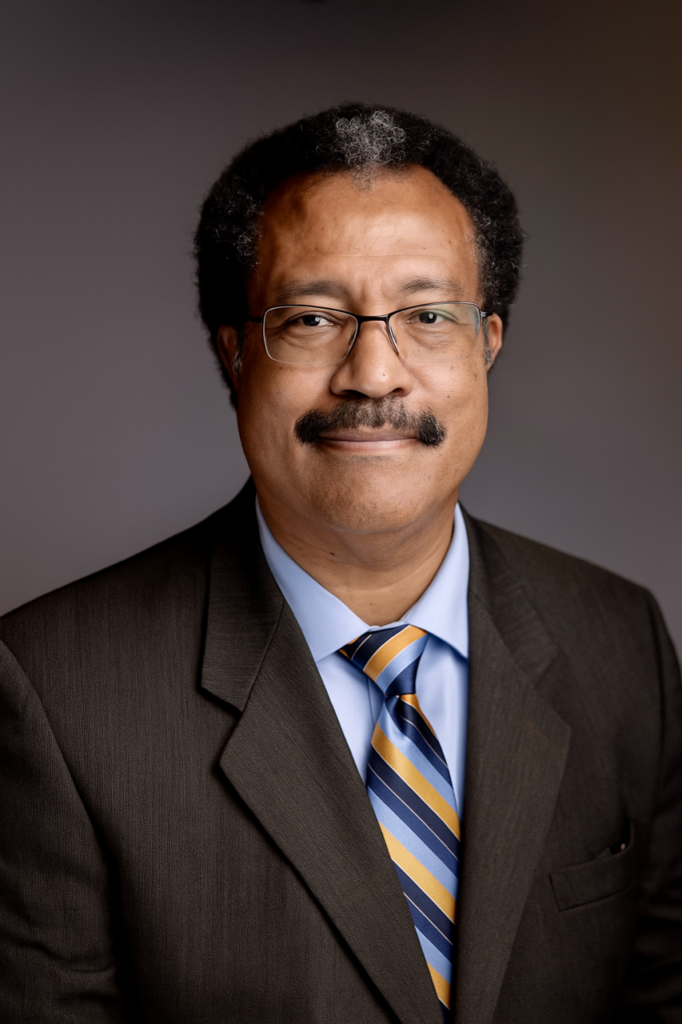
The Past-President office is held by Dr. Hugh D. Moore. He also serves as a liaison to Divisions 13 and 14 of the American Psychological Association. In addition, Dr. Moore is the Chair of both the Annual Meeting Committee and the Nominations Committee and serves on the ASPPB Executive Committee and the 2026 Midyear Committee. Dr. Moore completes his sixth year of service on the BOD at the end of 2026.
This brings us to the Board of Directors’ axis: Dr. Jennifer Laforce, ASPPB President.
Dr. Laforce leads ASPPB’s BOD and chairs the ASPPB Executive Committee. She also serves as the liaison to the Association of Canadian Regulatory Organizations and the Canadian Psychological Society. Her role includes serving as a spokesperson for ASPPB, alongside the CEO, a responsibility that is also fundamental to keeping our 66-member jurisdictions, the regulatory community, and the public informed.
Dr. Laforce has been involved with the Examination program thorough her time on the board, including multiple initiatives related to the integrated EPPP.

Ph.D., C.Psych.
ASPPB President
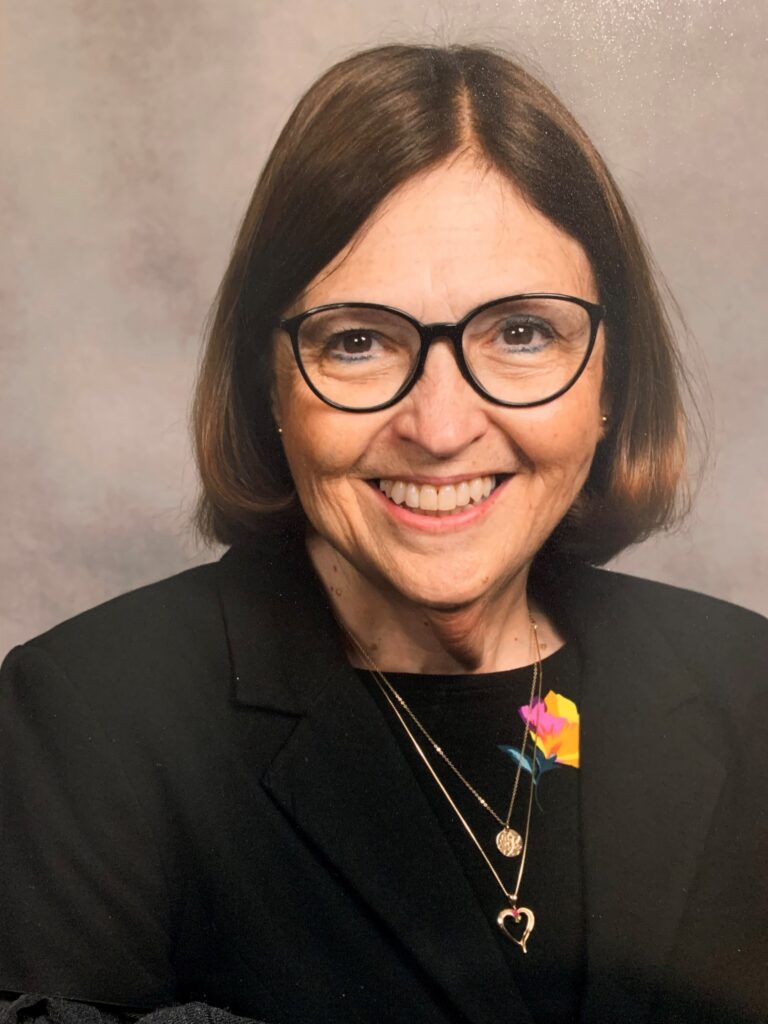
There is one more role on the BOD that offers the potential for a longer tenure of volunteer service: the Secretary-Treasurer. Upon election, it can be held up to three times, each for a three-year term. Dr. Cindy Olvey currently holds this role.
“We are honored to have Cindy in her eighth year as Secretary-Treasurer; her steadfast commitment to the core values of this association and her ability to look at matters each time with perspective and attention to detail are prime examples of servant leadership,” said Dr. Laforce. “Among other duties, she chairs the Finance and Audit and the Policies and Procedures Manual committees. Her steady guidance and institutional knowledge are fundamental to ASPPB.”
ASPPB Secretary-Treasurer
Dr. Olvey’s Experience with Volunteering for ASPPB
In 2009, I began working as Executive Director of the Arizona Board. My second day on the job, I traveled to Boston to attend the ASPPB Midyear Meeting. I learned so much from colleagues across the U.S. and Canada and discovered that ASPPB is an invaluable resource. Over the years, I eagerly volunteered and served on various Committees, Task Forces, and Work Groups, and eventually ran for the ASPPB Board of Directors. Serving the Association has been one of my greatest experiences. I always look forward to ASPPB meetings. In addition to the knowledge gained, my favorite part is the camaraderie—it’s unmatched!
ASPPB is thankful for its volunteers, who generously give their time to the Association while excelling as jurisdictional members, college professors, lawyers, board leaders, researchers, and licensed/registered psychologists—demonstrating remarkable dedication to the psychological community.