Artificial intelligence (AI) is becoming increasingly common in psychology practice, from administrative tools and electronic health records to note-taking, report writing, assessment, and patient-facing applications. For psychologists, the professional question is no longer whether AI will enter the practice; instead, psychologists must determine how to use AI and where responsibility for its use.
For practicing psychologists and regulators, the emerging conversation centers on striking a balance: recognizing AI’s potential to improve efficiency and expand access to care while ensuring the technology does not replace professional judgment, compromise confidentiality, or diminish the human relationships at the center of psychological practice.
This conversation, led by the Association of State and Provincial Psychology Boards® (ASPPB), brings together perspectives from three psychologists across academia, practice, and the legal domain.
AI as a Tool, Not a Replacement
Psychologists are already using AI-assisted tools for a range of tasks. These include generating clinical note outlines, summarizing information, identifying themes across records, and improving report readability. Used appropriately, these applications can reduce administrative burdens and let psychologists devote more attention to their patients.
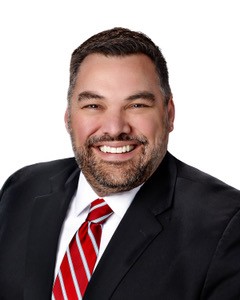
Gabriel Cline, PhD
Gabriel Cline, PhD, a licensed psychologist in Missouri who also serves on the State Committee of Psychologists and as a 1st-Year Director-at-Large of ASPPB’s Board of Directors, described AI as a useful tool when treated much like a capable intern: helpful but requiring supervision. “AI can analyze information, identify patterns, and perform certain routine tasks, but its work must be reviewed by the psychologist before it becomes part of professional practice.”
That distinction matters because AI-generated information can be inaccurate. Dr. Cline described instances in which AI produced significant errors in professional work, including errors that could have had serious consequences in forensic practice if not identified.
Dr. Ian Nicholson, who is semi-retired and has worked in both academia and psychology administration in Canada, similarly compared AI to a junior staff member. “There are a number of areas where AI can be helpful, particularly summarizing large amounts of information and providing examples of that information.” Dr. Nicholson underscored that the psychologist using AI must remain responsible for checking the technology’s work rather than treating it as an authority.
The message is straightforward: AI can augment professional practice, but it cannot assume professional responsibility.
Confidentiality and Informed Consent
The use of AI also raises fundamental questions about privacy and confidentiality. Psychologists must understand how an AI system handles the information they enter, where it stores that information, and whether it may use it for purposes beyond the immediate service.
Dr. Cline said he avoids using OpenAI models professionally because of concerns about client information and model training. Instead, he has used closed, healthcare-oriented systems that provide greater assurance about how sensitive information is handled.
“Professionally, I wouldn’t use those because I don’t want to train models, and I don’t want client data or any psychological data out in the cloud that way.” He uses AI selectively in a professional setting. “I have used tools like Bastion GPT*, which is a closed model. It’s for healthcare, and I’m more comfortable with it.”
He also views disclosure as part of informed consent. When psychologists use AI in practice, they should inform patients during intake which tool they plan to use and how they will use it. If a patient does not consent, the psychologist should not use the tool for that purpose.
This consideration extends beyond privacy policies. Psychologists must understand the practical implications of using an AI platform with clinical information, including where records are stored and who can access them. What happens when a complaint is raised against a psychologist due to AI misuse?
Some Legal Considerations of AI Use
As an attorney and practicing psychologist, Dr. Alex Siegel, ASPPB’s Director of Professional Affairs, noted that practitioners may ultimately be held responsible for how they use AI, even when a third-party platform supplies the technology. Dr. Siegel points out that psychologists must meticulously document how they select and use a product, and inform clients and request their permission to use it.
“So the issue becomes: where is the line for practitioners to use? Where is it beyond that? In our government, there’s really no federal policy on AI. So it’s now left up to the individual states to decide what to do. Many licensing boards that have contacted me are concerned they may be asked to develop AI regulations for the practice of psychologists in their jurisdiction. When they don’t believe they have the requisite knowledge to do that, they would prefer another governmental entity that understands AI to promulgate those rules in that jurisdiction.”
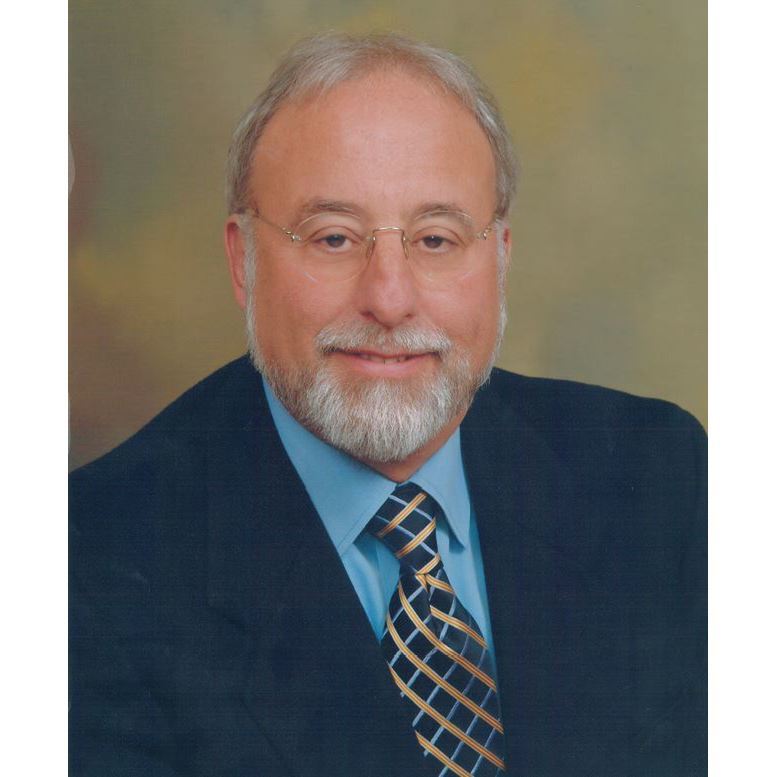
Alex Siegel. PhD, JD
Dr. Siegel noted that some states focus on practitioners and the public to protect public health, safety, and welfare from AI. However, other jurisdictions focus on mental health professionals, including psychologists, and require them to understand what they’re doing, remain ultimately responsible for their AI use, and hold the platforms harmless.
The lack of AI regulation can make it difficult for practitioners to understand what they can and can’t do. But as Dr. Siegel noted, these states are placing that responsibility on the mental health provider, and he finds it interesting that medicine is excluded from all of this.
Human Judgment Remains Central
The most significant question is what AI cannot replace.
Psychological practice depends on clinical judgment, professional expertise, and relationships. AI may process information quickly, but it cannot establish the human connection central to psychological care.
Dr. Cline emphasized that psychology is fundamentally relational. AI may help psychologists process data, recognize patterns, or reduce documentation demands, but the relationship between psychologist and patient remains a uniquely human component of care.
That distinction also matters when AI is used in assessment or other high-stakes activities. A psychologist must possess enough knowledge and expertise to recognize when an AI-generated output is inaccurate. Dr. Cline described an experience in which an AI system repeatedly produced incorrect test results. His professional knowledge allowed him to identify the error; without that expertise, he might have accepted the output as accurate.
For that reason, Dr. Cline identified trusting AI without questioning or verifying its output as one of the biggest mistakes a psychologist can make.
Lessons From Earlier Technologies
Concerns about AI are not entirely new. Dr. Nicholson sees parallels between today’s discussions and earlier transitions to computers, the internet, electronic health records, and telepsychology.
Ian Nicholson, PhD
When computers first entered psychological practice, professionals worried about security, errors, and the possibility that technology would distance psychologists from their patients. Similar concerns arose as computerized assessment and interpretation became more common.
Dr. Nicholson argues that these historical experiences offer an important lesson. Technology changes faster than formal rulemaking and regulatory processes can keep pace. By the time regulators establish highly specific requirements, the technology may already have evolved. As a result, regulators may need to rely on broader professional standards and principles rather than attempting to regulate every specific application of emerging technology.
Building AI Literacy
As AI becomes more integrated into professional practice, psychologists will need more than basic familiarity with the technology. They need enough AI literacy to evaluate potential benefits and risks, understand privacy implications, recognize inaccurate outputs, and make sound professional decisions about when and how to use a tool.
Dr. Nicholson observed that students are often ahead of educational programs in their familiarity with emerging technologies, while training programs can be slower to adapt their curricula. Dr. Cline similarly argued that AI should be integrated into professional training and taught as another tool psychologists must understand before using it.
The goal is not to make psychologists technology experts. Rather, psychologists need enough knowledge to make informed decisions and remain accountable for them.
Finding the Balance
AI can reduce administrative burdens, improve efficiency, expand access to care, and help psychologists focus more directly on their patients. Dr. Cline has found that using AI to assist with documentation can sometimes help him stay more present during client interactions.
The challenge for psychologists is therefore neither to reject AI nor embrace it without reservation. As Dr. Cline put it, professionals must balance resisting technology with accepting it unquestioningly. The relevant question is whether its use improves the client experience without creating unacceptable risk.
“We are the professionals, and we have to strike this balance between what works and what doesn’t in order to be effective.” Greater efficiency cannot come at the expense of professional responsibility and human interaction.
For regulators, educators, and practitioners alike, that balance will continue to evolve as AI develops. The technology may change rapidly, but psychologists’ responsibilities remain: protect clients, exercise professional judgment, maintain competence, safeguard confidentiality, and remain accountable for the services they provide.
AI may become an increasingly important part of psychological practice. But the psychologist will remain responsible for deciding when, where, and how to use it.
To dive deeper into conversations about AI, psychology, and regulation perspectives, read the two prior articles in this series:
*BastionGPT is a secure, healthcare-grade AI assistant and medical scribe with core features like strict privacy and compliance with HIPAA, PIPEDA, and APP standards without using patient data to train public models. It can also transcribe patient encounters and generate clinical notes such as SOAP (Subjective, Objective, Assessment, Plan), DAP (Data, Assessment, Plan), BIRP (Behavior, Intervention, Response, Plan), and H&P (History and Physical) notes, as well as referral letters and discharge summaries.
Biographies
Gabriel Cline, PhD
Gabriel Cline, Ph.D., is a licensed psychologist and founder of Psych Associates in Springfield, Missouri. He earned his Ph.D. in Counseling Psychology from the University of Nebraska and has practiced since 2009. His work encompasses psychological assessment, forensic and court-involved evaluations, psychotherapy, and professional consultation.
Dr. Cline was appointed to the Missouri State Committee of Psychologists in 2020 and serves as a Director-at-Large on the Board of Directors of the Association of State and Provincial Psychology Boards (ASPPB). He has taught psychology at both the undergraduate and graduate levels and has trained and supervised emerging mental health professionals. His professional interests include psychological assessment, professional regulation, and the evolving role of technology and artificial intelligence in psychology.
Ian Nicholson, PhD.
Dr. Ian Nicholson received his Ph.D. in Clinical Psychology from the University of Western Ontario (a CPA/APA accredited program) in 1993. He is registered with the College of Psychologists and Behaviour Analysts of Ontario (CPBAO) since 1994 and is currently listed as having competencies in working with children, adolescents, and adults in Clinical Psychology and Health Psychology. For most of his career, he worked at London Health Sciences Centre (Canada’s second-largest teaching hospital); most of that time as manager of its Psychology Department, retiring in 2024. During this time, he has also taught graduate and undergraduate courses in clinical psychology at the University of Western Ontario.
During his career, he has volunteered with several professional organizations including serving as president of the Ontario Psychological Association, the Canadian Council of Professional Psychology Programs, the Canadian Psychological Association, and the College of Psychologists and Behaviour Analysts of Ontario. He has been involved with ASPPB for over 20 years, first starting on the Item Development Committee in 2004, transitioning to the Exam Committee (now the Exam Part-1 Committee) in 2012, which he has chaired since 2018. He is currently working as an exam consultant for ASPPB.
Alex M. Siegel, J.D., Ph.D.
Dr. Alex Siegel served on the Pennsylvania State Board of Psychology for 13 years, including six years as Chair. Dr. Siegel previously served on the Association of State and Provincial Psychology Boards (ASPPB) Board of Directors and as ASPPB President in 2008. He has served on several ASPPB committees, including the Annual Meeting Committee, Midyear Meeting Committee, Committee on Disciplinary Issues (CODI), Behavior Analysis Task Force, Telepsychology Task Force, Telepsychology Joint ASPPB/APA/APAIT Task Force, 5th International Congress on Licensure, Certification, and Credentialing of Psychologists, Joint Designation Committee (JDC), International Congress Task Force (ICTF), Legislative and Regulatory Affairs Task Force (LRATF), and the Long-Range Planning Committee (LRPC). Currently, Dr. Siegel serves as Chair of the Model Act and Regulations Committee (MARC) and, as Director of Professional Affairs, as a liaison between ASPPB and state and national psychological organizations.