History and Development of the integrated Examination for Professional Practice in Psychology® (EPPP)
History of the Examination for Professional Practice in Psychology (EPPP)
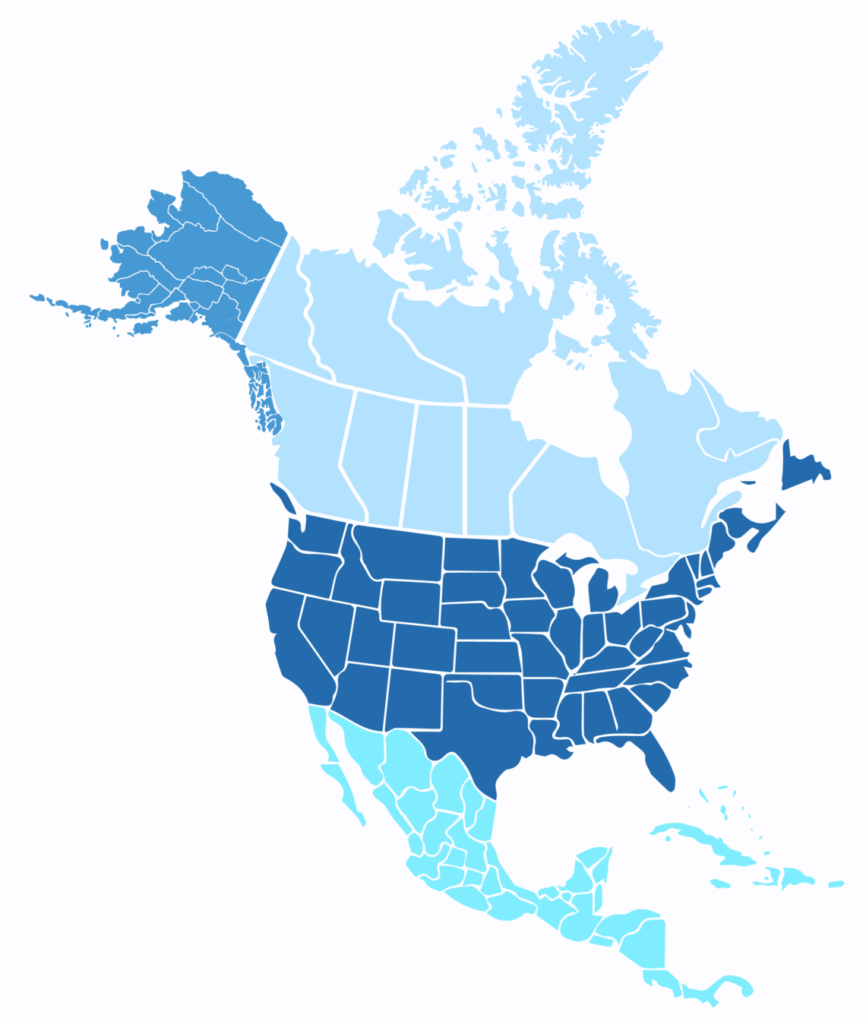
Before the creation of the EPPP, each state and province used its own licensing exam, resulting in inconsistent requirements for professional entry. Recognizing the need for consistency, the Association of State and Provincial Psychology Boards® (ASPPB) created a single, standardized exam that would fairly and reliably measure the foundational knowledge required for safe and effective practice at the entry level in the field of psychology and establish a uniform standard in psychology across jurisdictions in the United States and Canada.
The first national administration of the EPPP took place in 1965 and has continued to evolve appropriately with the field of psychology since. Now known as the EPPP (Part 1-Knowledge), the computer-based exam is required for licensure as a psychologist in all ASPPB Member Jurisdictions.
In 2008, ASPPB began developing a skills assessment tool. The result was the EPPP (Part 2-Skills), a computer-based exam first delivered in 2020, that assesses a licensure candidate’s skills required for entry-level independent practice. The EPPP (Part 2-Skills) is currently required by some jurisdictions, in addition to the EPPP (Part 1-Knowledge), for licensure. Until October 2024, ASPPB had been working toward delivering the EPPP in two required parts, one part focused on knowledge and one on skills. However, due to changes in needs, it was decided to move toward an integrated exam assessing minimal competency in both knowledge and skills.
Development of the integrated Examination for Professional Practice in Psychology (EPPP)
As the needs and requirements of the field of psychology evolve, so too must the assessment tools. In 2025, ASPPB began the exciting and arduous development of the integrated EPPP.
During 2025, ASPPB:
- Held four town hall meetings to gather input and respond to questions from various constituencies, including jurisdictional stakeholders, the education and training community, students, license/certification candidates, and licensed psychologists.
- Created, distributed, and analyzed the results of an EPPP Job Task Analysis (JTA) Survey completed by thousands of licensed psychologists throughout the United States and Canada. The JTA process occurs once every 7 to 10 years and has the purpose of gathering the most current professional standards/needs, delineating the knowledge base and skills necessary for competent entry-level practice in psychology, and assigning appropriate weighting to each.
- Approved the blueprint for the integrated EPPP.
Development through delivery, the timeline of the integrated EPPP:
The current EPPP (Part 1-Knowledge) and EPPP (Part 2-Skills) will continue to be provided, maintained, delivered, scored, and reviewed in their current format for use by ASPPB Member Jurisdictions until the integrated EPPP is fully implemented. The integrated EPPP will become operational in the fourth quarter of 2027, at which time the EPPP (Part 1-Knowledge) and EPPP (Part 2-Skills) will no longer be available to first-time test takers. Candidates who fail the EPPP (Part 1–Knowledge) or EPPP (Part 2–Skills) prior to that date will be allowed to retake the respective exam through March 31, 2028. Candidates who have not taken the EPPP (Part 1–Knowledge) or EPPP (Part 2–Skills) prior to that date will be required to take the integrated EPPP. As of April 01, 2028, the integrated EPPP will be the only exam available. The EPPP (Part 1-Knowledge) and the EPPP (Part 2-Skills) will no longer be accessible.
Note: It is important to know the timeline for the current and the integrated EPPP, as the current exams and the integrated EPPP have different blueprints and test specifications. Please consider when you will become eligible/ready to take the licensure exam and ensure you prepare using the blueprint of the exam you will be required to take for licensure at that time.
The integrated EPPP will:
- Be a single-day administration with a total testing time of 5 hours plus an optional 30-minute break.
- Be a computer-based exam administered in Pearson testing centers
- Have a total of 215 questions, of which 175 questions will be scored and 40 will be unscored (pretest) items
- Include a variety of question formats, including traditional multiple-choice items, extended multiple-choice questions, scenario-based case studies, and multimedia-based questions (e.g., audio and video)
- Measure competencies across 6 content domain areas with specific knowledge and skills
- Have a pass/fail standard based on a total score
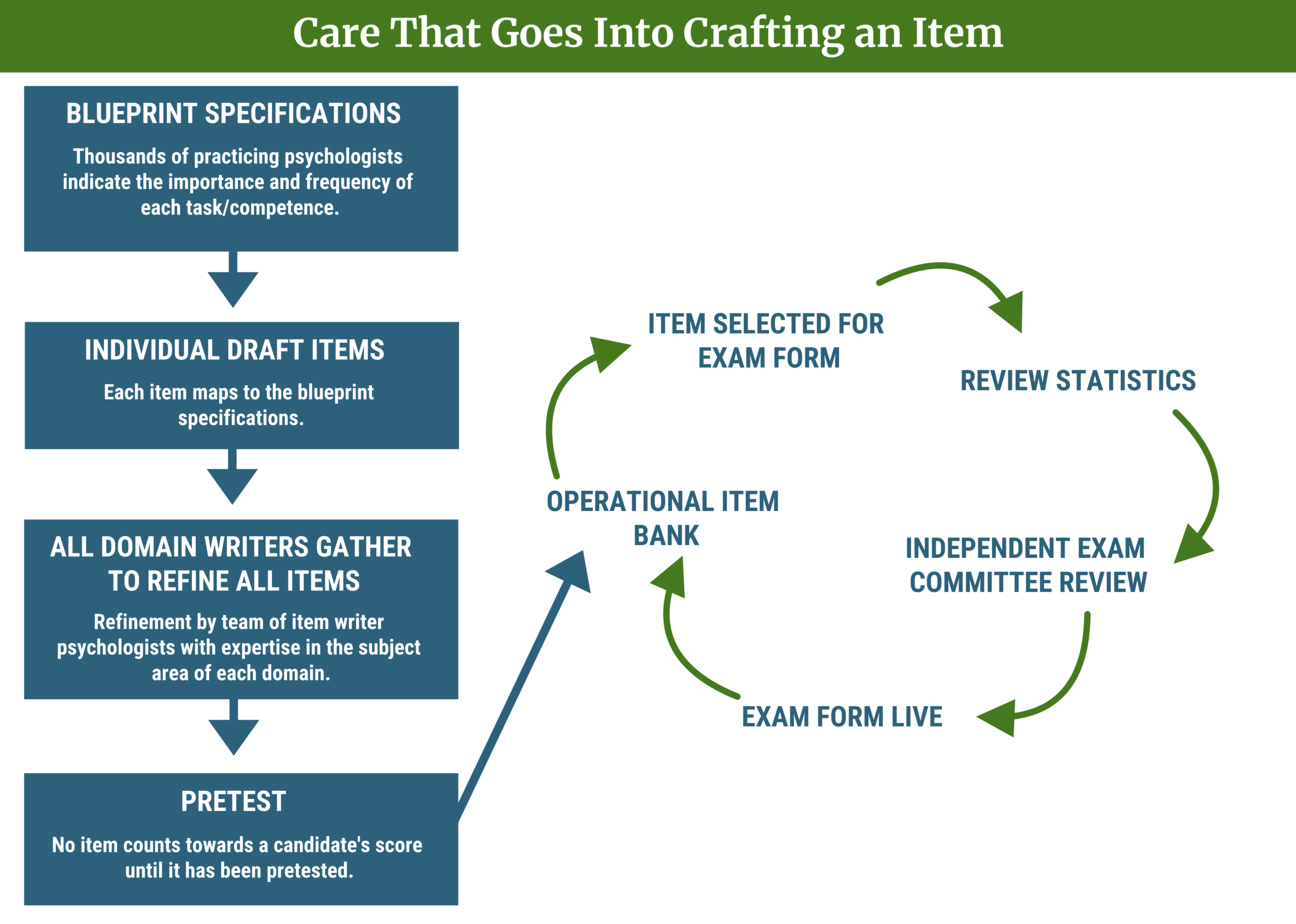
Lifecycle of an EPPP Item
The creation of items for the integrated EPPP is an exhaustive process that involves hundreds of hours of research, preparation, collaboration, and continual review with subject matter experts for each domain assessed on the exam. Each item has a lifecycle.
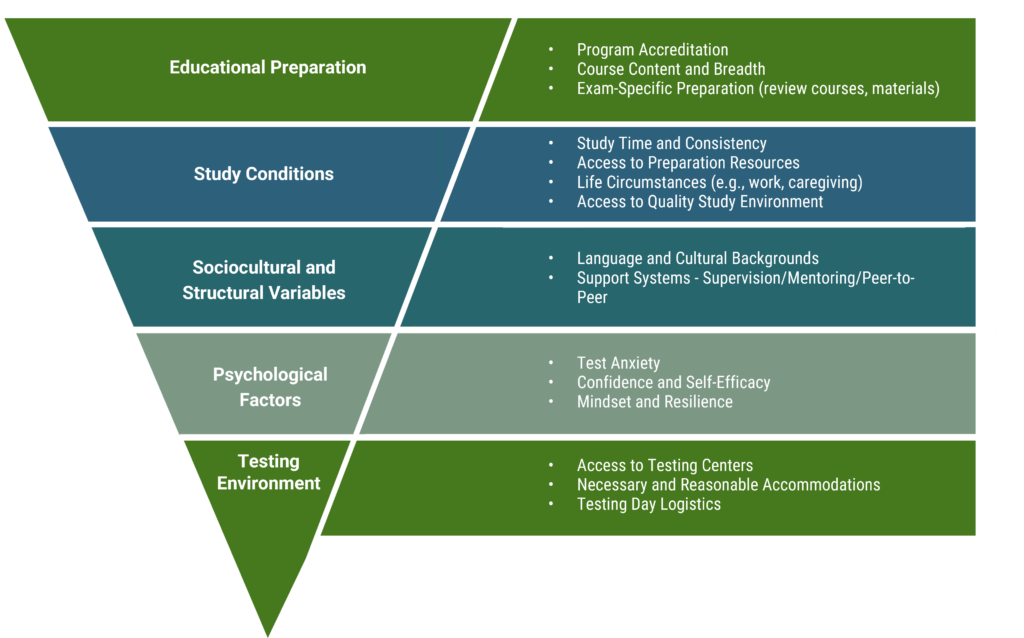
Factors Influencing EPPP Performance Outcomes
With any assessment tool, there are numerous factors that may influence your performance. For the EPPP, it is no different. Here are many of the identified factors: