Internationally Trained Applicants
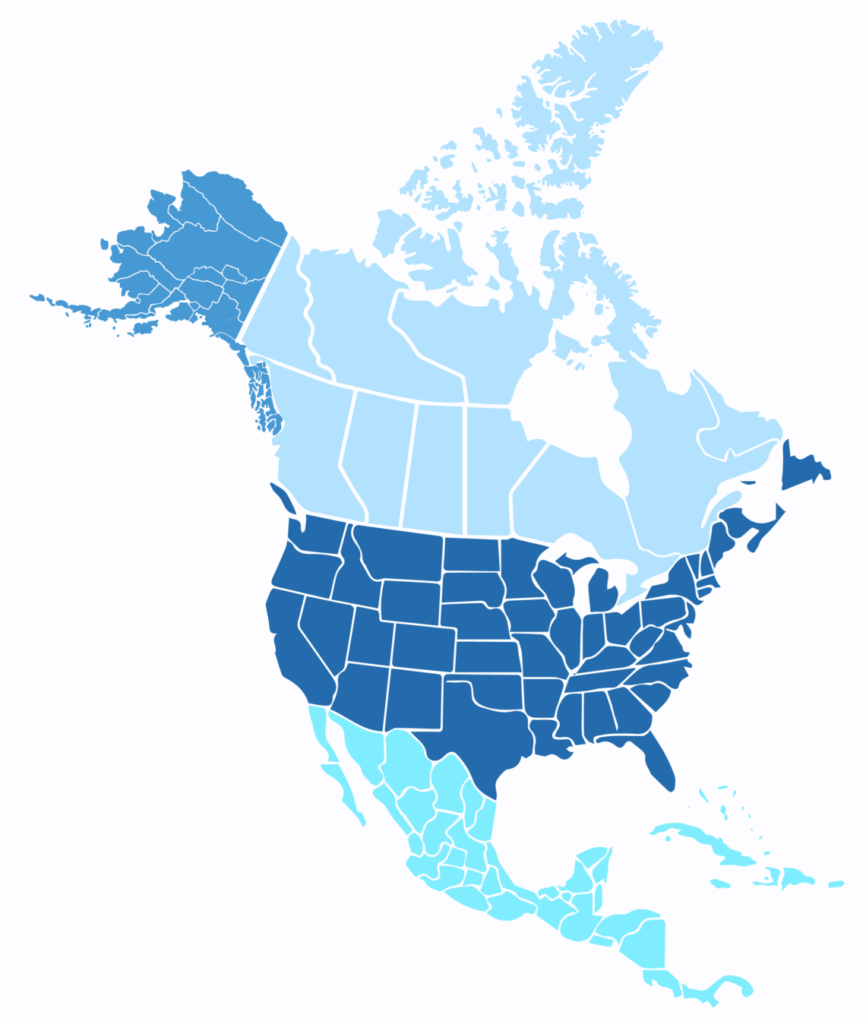
If you received your doctoral-level training or degree in psychology outside the U.S. or Canada and seek licensure in either country, the first step towards licensure is to review the licensing requirements for applicants trained in the U.S. or Canada.
It is also advisable to contact the licensing authority in the jurisdiction where you are seeking licensure.
- In Canada, each province sets the specific education and experience requirements for licensure.
- Most U.S. jurisdictions require a doctoral degree in clinical, counseling, or school psychology.
- In the U.S., each state determines the specific education and experience requirements for licensure.

Demonstrating educational and supervised experience equivalence
If you hold a degree from a university outside the U.S. or Canada, you must demonstrate that your education and degree experience are equivalent to the requirements established in your desired jurisdiction. Most licensing authorities lack the resources to compare your degree to accredited programs in the U.S. and Canada. Instead, they rely on members of the National Association of Credential Evaluation Services (NACES). Contact NACES directly to select a member organization that can translate your education and degree into a format that U.S. and Canadian jurisdictions can compare with their specific requirements.
If your education and degree meet the requirements of your intended jurisdiction, you must next demonstrate that your supervised experience is also equivalent to that required for applicants trained in the U.S. or Canada.
Taking the Examination of Professional Practice of Psychology® (EPPP)
When you demonstrate education, degree, and experience equivalence, you may apply directly to your intended jurisdiction to become a candidate for licensure. If your application is approved, you must earn a passing score on the EPPP.
Currently, the EPPP is a two-part exam that provides licensing boards in our member jurisdictions with essential information about your foundational knowledge of psychology EPPP (Part 1-Knowledge) and your ability to practice effectively in applied, real-world situations EPPP (Part 2-Skills).
As psychology continues to evolve, so does the EPPP. Ongoing research, psychometric updates, and input from psychology boards and educators ensure that the exam remains relevant, fair, and reflective of current professional practice. These factors have supported the development of a new, integrated EPPP intended to help ensure that every psychologist entering the field is prepared to serve the public with competence, integrity, and care.
There will be a call for EPPP candidates to volunteer for the beta test of the integrated EPPP this fall. In the Spring of 2027, beta testing for the integrated EPPP will begin.
In addition to passing the EPPP, most U.S. and Canadian jurisdictions require applicants to pass an examination covering local mental health laws and rules.